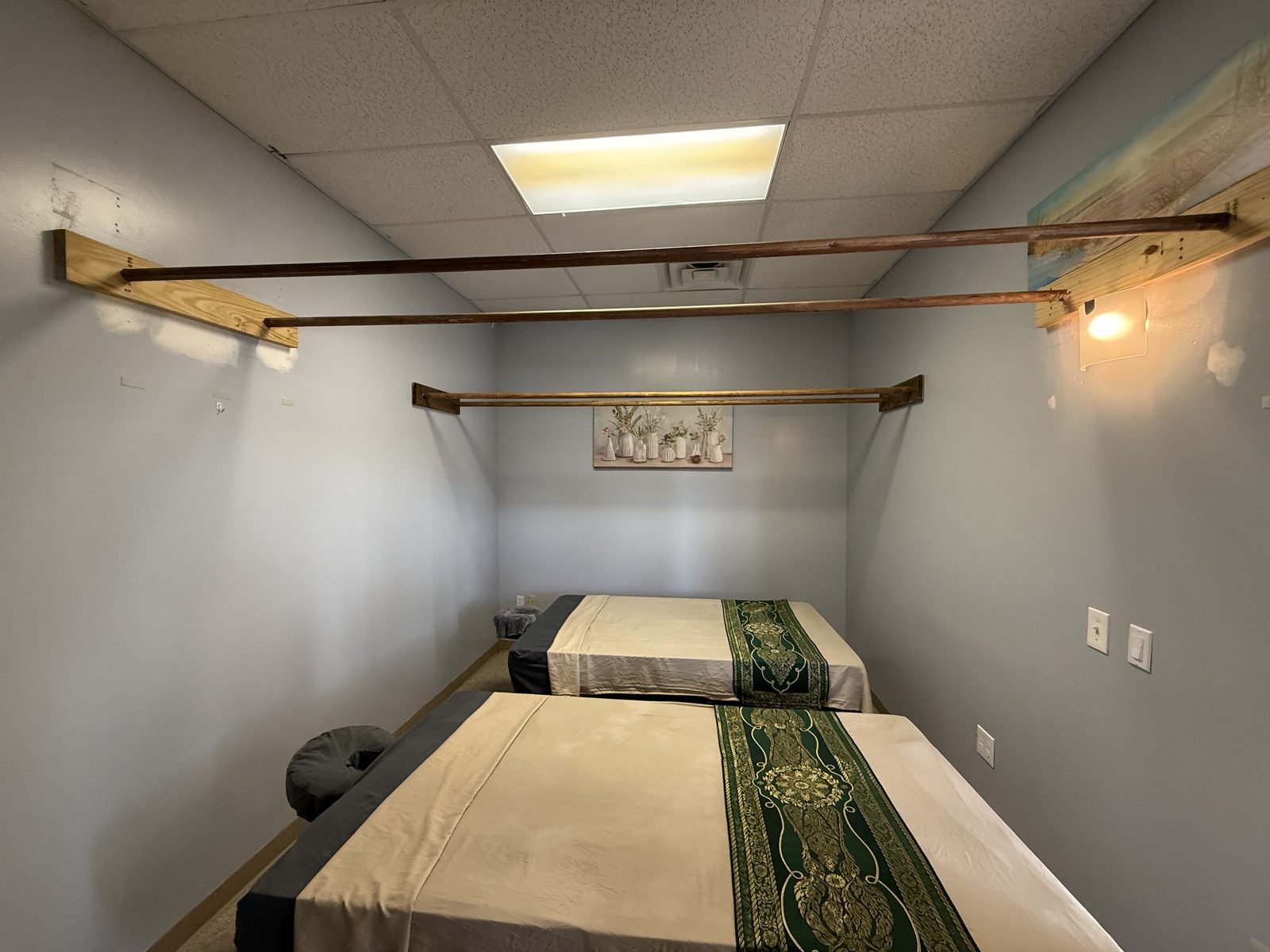
Thai massage is one of the oldest healing traditions still practiced today: a fully-clothed, mat-based therapy that blends rhythmic acupressure with gentle, assisted stretching. If you've only ever had an oil-based Swedish massage, your first Thai session will feel surprisingly different. Here's how it works and what to expect.
A tradition rooted in Thai culture
Traditional Thai massage, or Nuad Thai, is part of Thailand's traditional healthcare culture, with influences from Ayurvedic medicine and Buddhist practice. In 2019, UNESCO added Nuad Thai to its Representative List of the Intangible Cultural Heritage of Humanity. Traditional practice combines pressure, assisted movement and stretching, and includes work along what Thai tradition describes as sen — energy pathways understood to run throughout the body. The guiding idea is that tension builds up along these lines, and that skilled, mindful pressure and movement can help release it.
What makes Thai massage different
Traditional Thai massage is quite different from a typical oil-and-table massage. A few key things set it apart:
- You stay clothed. You wear loose, comfortable clothing the whole time, with no oils or lotions in the traditional style.
- It happens on a mat. Instead of a table, you lie on a firm, padded mat that gives your therapist room to move you.
- It combines pressure and stretching. Your therapist uses their palms, thumbs, forearms, elbows, knees and even feet to press along the body's energy lines, then guides you through a series of yoga-like stretches.
- You take part in it. Because of all the assisted stretching, Thai massage is often nicknamed "lazy person's yoga": the therapist does the work while your body relaxes into each stretch.
The result feels as invigorating as it is relaxing. A lot of people leave with more energy than they walked in with.
What to expect during a session
Sessions typically run 60, 90 minutes or 2 hours; the longer formats give your body more time to fully unwind. Here's the general flow:
- Before you start, your therapist will ask about any pain, injuries, or areas you'd like to focus on. This is the moment to mention anything relevant.
- Throughout the session, expect a rhythmic pattern of pressing, rocking and stretching that moves gradually from your feet upward, or works methodically through each region of the body.
- Pressure is always your call. Good Thai massage should feel like a "satisfying" stretch or pressure, never sharp pain. Speak up any time you'd like more or less, and a skilled therapist will adjust to you.
Traditional vs. Thai-inspired treatments
Classic Thai massage is oil-free and clothed. Many spas, ours included, also offer Thai-inspired treatments that blend Thai techniques with warm oils or heated stones for a more traditional spa feel. At Magnolia Wellness Massage, our Thai Traditional Massage stays true to the authentic, oil-free style, while our Thai Signature Massage pairs it with aromatherapy oils and hot stones. Neither is "better"; it comes down to the experience you want.
The benefits: what research suggests, and what clients tell us
What the research suggests
Research into traditional Thai massage is still developing, but the early evidence is encouraging. A systematic review of controlled trials found that traditional Thai massage was associated with reduced pain, along with improvements in flexibility, perceived muscle tension, disability and anxiety in people living with chronic pain — while noting that more research is still needed to confirm the longer-term effects. Results vary by condition and by study, and massage shouldn't replace medical evaluation or treatment when one is needed.
What our clients tell us
Beyond what studies measure, here's what guests at Magnolia Wellness Massage share with us again and again:
- Looser, more mobile muscles and joints, thanks to all the guided stretching. Desk workers and active people especially tend to notice this.
- Relief from everyday tightness and stiffness, especially through the back, shoulders, hips and legs.
- A calmer, less stressed mind, with many people simply feeling more settled afterward.
- A refreshed, energized feeling, rather than the sleepy heaviness some oil massages can leave behind.
These reflect what our clients experience, and everyone's body responds a little differently. Massage supports a healthy routine, but it isn't a substitute for medical care — as a regular habit, though, many people find it makes a genuine difference in how their body feels day to day.
Who it's for, and who should be cautious
For most healthy adults, massage therapy is considered low risk when it's performed appropriately by a trained, licensed practitioner, and serious side effects are rare. Because traditional Thai massage involves more movement, stretching and firm pressure than a typical relaxation massage, a few sensible precautions are worth keeping in mind — it's especially popular with people who sit at a desk all day, stay active, or carry their stress in tight muscles.
Please talk to your healthcare provider first (and let us know when you book) if you are pregnant (we offer a dedicated prenatal massage designed for expecting mothers instead), have had a recent surgery or injury, take blood-thinning medication or have a bleeding disorder, live with osteoporosis or another fracture risk, have uncontrolled high blood pressure, a herniated disc, or any other condition that may be affected by pressure or movement. A good therapist would always rather adapt your session than risk your comfort or safety.
And as the U.S. National Center for Complementary and Integrative Health advises, don't use massage therapy to postpone seeing a healthcare provider about a medical problem.
Before and after your session
- Wear or bring loose, comfortable clothing you can move and stretch in.
- Arrive well hydrated and avoid a heavy meal right before your appointment.
- Afterward, drink water and take it easy for a bit. It's normal to feel mild soreness for a day or two, much like after a good workout, and it usually eases quickly.
Sources & further reading
- UNESCO — Nuad Thai, Traditional Thai Massage (Representative List of the Intangible Cultural Heritage of Humanity, 2019)
- National Center for Complementary and Integrative Health — Massage Therapy: What You Need To Know
- Keeratitanont et al. — The efficacy of traditional Thai massage for the treatment of chronic pain: a systematic review (Complementary Therapies in Clinical Practice, 2015)
Experience authentic Thai massage in The Woodlands & Magnolia
At Magnolia Wellness Massage, Thai bodywork is our specialty. Our Texas-licensed therapists are trained in authentic Thai technique, and we're glad to help you choose between our traditional and signature styles based on what your body needs. Whether it's your first Thai massage or your hundredth, we'd love to welcome you.